Does UAE e-invoicing apply to my business?
The decisions say “persons”, “taxable supplies”, “AED 50 million”. You want to know: is this me, and when.
The short answer
- You sell to other businesses or to government in the UAE — you are in scope.
- You only sell to consumers — B2C is excluded until further notice.
- Revenue of AED 50 million decides when you appoint a provider and go live, not whether the rules apply.
- Not being VAT-registered does not take you out of scope for B2B or B2G.
- Nothing in the decisions excludes free-zone businesses.
- You may adopt voluntarily from 1 July 2026.
If two of those lines pull in different directions, keep reading. The rest of this page is the same checklist in plain words, then what to do this quarter.
Revenue: AED 50 million decides when, not whether
The large-revenue phase uses annual revenue of AED 50 million. Cross that line and you appoint an Accredited Service Provider earlier and go live earlier. Stay under it and you appoint a provider by 31 March 2027 and go live on 1 July 2027. Either way you are in the system if you issue invoices to businesses or government.
Do not treat the threshold as a way to stay out. It is a phase date. A cafe that invoices other companies is in scope. A consultancy that invoices ministries is in scope. A trader whose turnover is well below the line still has a 2027 live date.
VAT-registered or not
VAT registration changes the document you issue, not whether e-invoicing applies. A VAT-registered seller issues a tax invoice. A verified non-VAT-registered seller issues a commercial invoice. Both are document types the e-invoicing rules know. Commercial invoices are still in scope for B2B and B2G.
If you are below the VAT registration threshold and you only sell to consumers, you may be outside both VAT registration and e-invoicing for those sales. If you sell to businesses, the commercial invoice path is the one that applies. Confirm your VAT position with your adviser; this page does not decide it for you.
Who you sell to
Businesses and government: yes. Consumers: not yet. The scope is B2B, B2G, G2B and G2G. B2C is excluded until further notice. A shop that invoices a company for a wholesale order is in. The same shop selling over the counter to walk-in customers is not, for those consumer sales, until the portal says otherwise.
Mixed businesses should separate the two. The e-invoice obligation attaches to the in-scope supplies, not to the trade licence as a whole.
Free zones
Nothing in the decisions excludes free-zone businesses. If you are established in a free zone and you make in-scope supplies, plan for the same dates as a mainland business of the same revenue. Do not wait for a free-zone carve-out that the instruments do not contain. If your adviser has a specific free-zone analysis, follow that — this page only reports that the decisions themselves do not write an exclusion.
Voluntary adoption from 1 July 2026
You may start before your mandatory date. The voluntary window opens on 1 July 2026 for any revenue. That is useful if a large customer asks you to exchange e-invoices early, or if you would rather tidy records in 2026 than rush in 2027.
What to do this quarter
Write down who you sell to — businesses, government, consumers, or a mix. Write down whether you are VAT-registered. Write down a honest view of annual revenue against AED 50 million. Put your legal name, address, emirate and tax numbers in one place. If a customer already asks for structured invoices, treat that as a reason to start, not as a surprise. Then read the deadline timeline for the date that matches your row.
Questions owners ask
I am below the VAT registration threshold
You are still in scope for B2B and B2G supplies. A non-registered seller issues a commercial invoice. Being below the VAT threshold does not by itself remove e-invoicing.
All my customers are consumers
B2C is excluded until further notice. If that is truly all of your sales, the e-invoicing mandate does not reach those invoices yet. Re-check if you also invoice companies or government.
I sell through a marketplace
The decisions carve out no marketplace rule. Who issues the e-invoice follows who is the seller on the invoice. Confirm with the marketplace and your adviser rather than assuming the platform will file for you.
I am in a free zone
Nothing in the decisions excludes free-zone businesses. Plan on the same supplier-side rules and dates unless your adviser shows you a specific exclusion that the decisions themselves do not state.
How Fatura Sahla helps
Business details are entered once. The app says whether a seller is VAT-registered and issues the right document type.
We meet you where you are, and get you e-invoice-ready with near-zero overhead.
Your sales live in notebooks, spreadsheets and sales people in the field
Photograph the paper, import the sheet, or type it in. Every path ends in one complete record, checked in plain words.
A computer, a smartphone, a tablet, or a simple phone with WhatsApp
Works in the browser and on Android and iPhone. Send an invoice photo to WhatsApp and get the finished PDF back in the chat.
A team that reads English, Arabic, Urdu, Hindi, or a mix of them
The app, the WhatsApp replies and every check speak all four. Invoices print in English or Arabic, whatever the team uses.
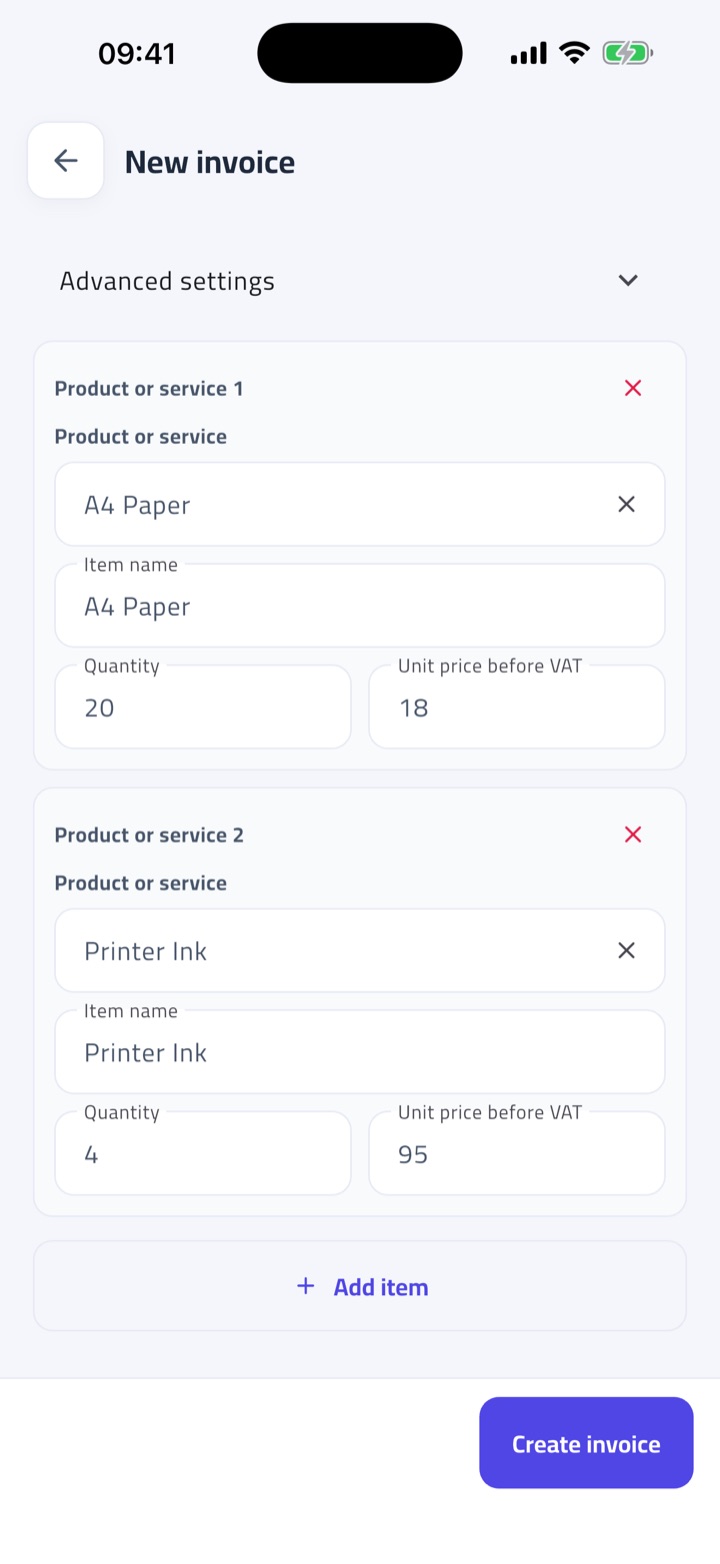
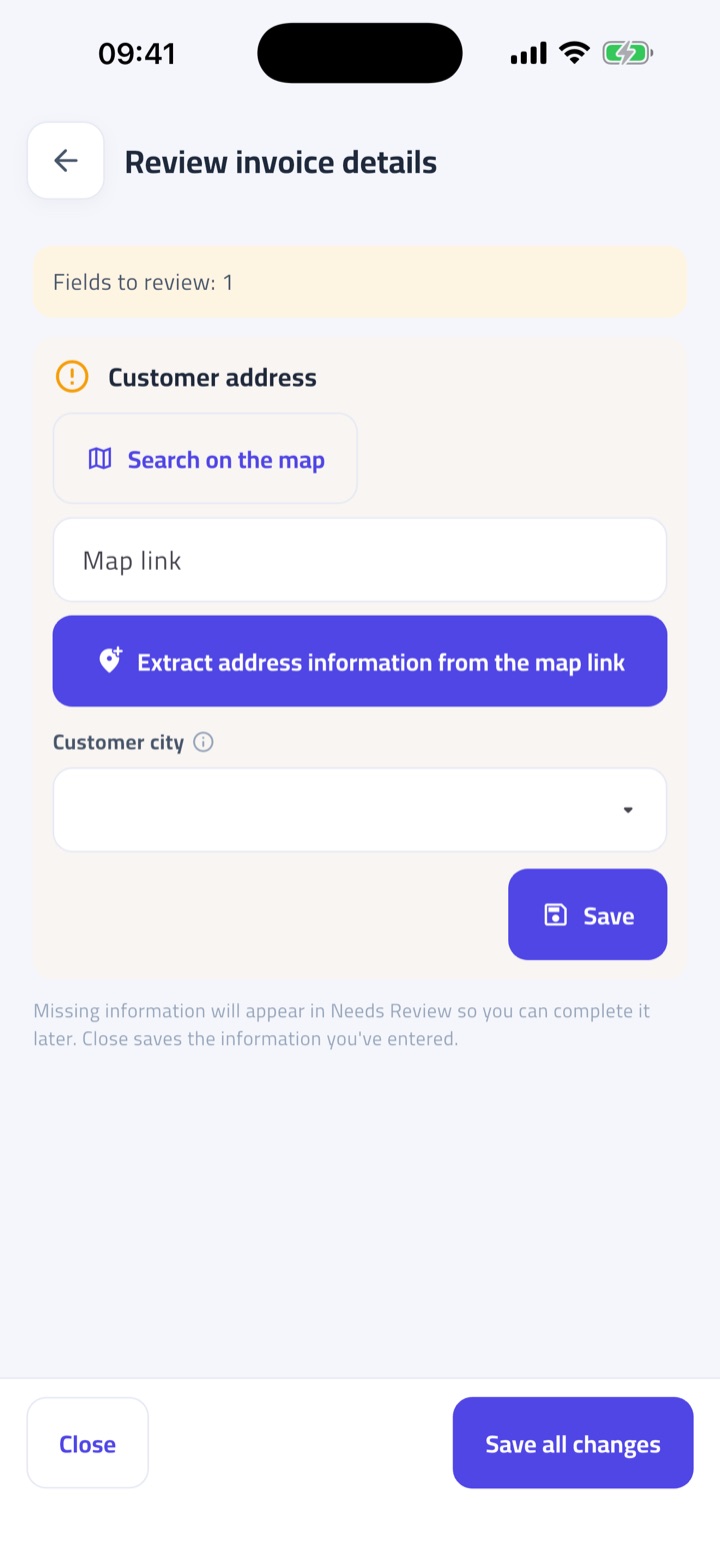
Fatura Sahla helps you get ready. It is not an Accredited Service Provider and does not send invoices to the Federal Tax Authority. This article is general information, not tax advice.
Last reviewed September 14, 2026